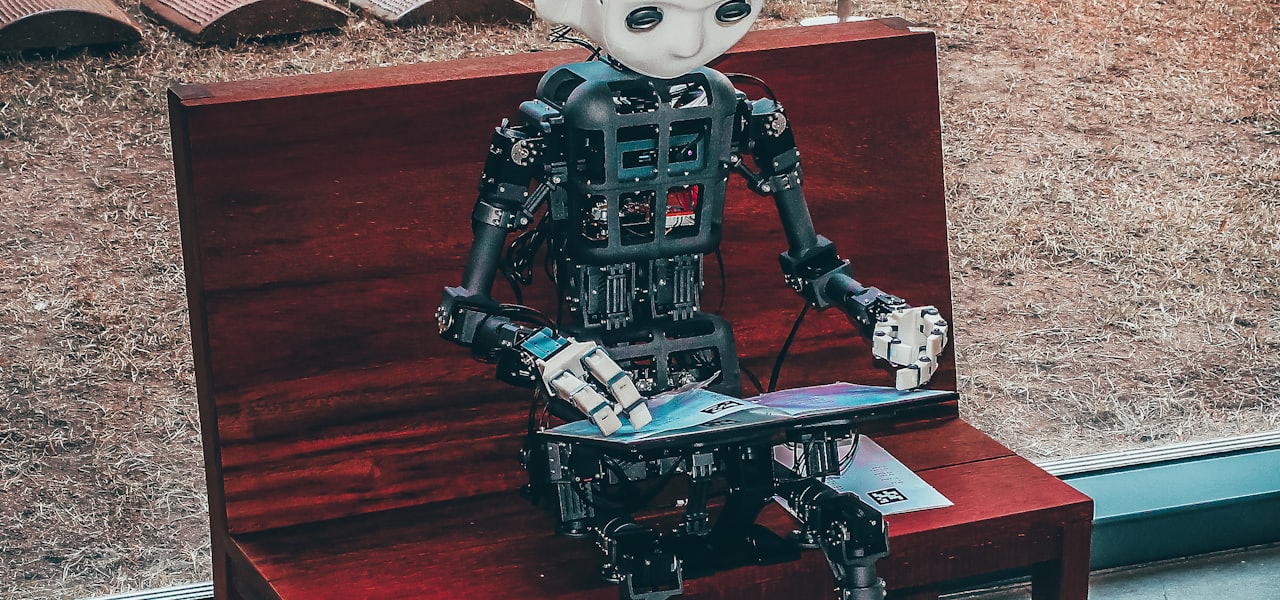
Eugene Goostman is a chatbot that some regard as having passed the Turing test, a test of a computer's ability to communicate indistinguishably from a human. Developed in Saint Petersburg in 2001 by a group of three programmers, the Russian-born Vladimir Veselov, Ukrainian-born Eugene Demchenko, and Russian-born Sergey Ulasen, Goostman is portrayed as a 13-year-old Ukrainian boy—characteristics that are intended to induce forgiveness in those with whom it interacts for its grammatical errors and lack of general knowledge. The Goostman bot has competed in a number of Turing test contests since its creation, and finished second in the 2005 and 2008 Loebner Prize contest. In June 2012, at an event marking what would have been the 100th birthday of the test's author, Alan Turing, Goostman won a competition promoted as the largest-ever Turing test contest, in which it successfully convinced 29% of its judges that it was human. On 7 June 2014, at a contest marking the 60th anniversary of Turing's death, 33% of the event's judges thought that Goostman was human; the event's organiser Kevin Warwick considered it to have passed Turing's test as a result, per Turing's prediction in his 1950 paper "Computing Machinery and Intelligence", that by the year 2000, machines would be capable of fooling 30% of human judges after five minutes of questioning. The validity and relevance of the announcement of Goostman's pass was questioned by critics, who noted the exaggeration of the achievement by Warwick, the bot's use of personality quirks and humour in an attempt to misdirect users from its non-human tendencies and lack of real intelligence, along with "passes" achieved by other chatbots at similar events. == Personality == Eugene Goostman is portrayed as being a 13-year-old boy from Odesa, Ukraine, who has a pet guinea pig and a father who is a gynaecologist. Veselov stated that Goostman was designed to be a "character with a believable personality". The choice of age was intentional, as, in Veselov's opinion, a thirteen-year-old is "not too old to know everything and not too young to know nothing". Goostman's young age also induces people who "converse" with him to forgive minor grammatical errors in his responses. In 2014, work was made on improving the bot's "dialog controller", allowing Goostman to output more human-like dialogue. A conversation between Scott Aaronson and Eugene Goostman ran as follows: == Competitions == Eugene Goostman has competed in a number of Turing test competitions, including the Loebner Prize contest; it finished joint second in the Loebner test in 2001, and came second to Jabberwacky in 2005 and to Elbot in 2008. On 23 June 2012, Goostman won a Turing test competition at Bletchley Park in Milton Keynes, held to mark the centenary of its namesake, Alan Turing. The competition, which featured five bots, twenty-five hidden humans, and thirty judges, was considered to be the largest-ever Turing test contest by its organizers. After a series of five-minute-long text conversations, 29% of the judges were convinced that the bot was an actual human. === 2014 "pass" === On 7 June 2014, in a Turing test competition at the Royal Society, organised by Kevin Warwick of the University of Reading to mark the 60th anniversary of Turing's death, Goostman won after 33% of the judges were convinced that the bot was human. 30 judges took part in the event, which included Lord Sharkey, a sponsor of Turing's posthumous pardon, artificial intelligence Professor Aaron Sloman, Fellow of the Royal Society Mark Pagel and Red Dwarf actor Robert Llewellyn. Each judge partook in a textual conversation with each of the five bots; at the same time, they also conversed with a human. In all, a total of 300 conversations were conducted. In Warwick's view, this made Goostman the first machine to pass a Turing test. In a press release, he added that: Some will claim that the Test has already been passed. The words Turing Test have been applied to similar competitions around the world. However this event involved more simultaneous comparison tests than ever before, was independently verified and, crucially, the conversations were unrestricted. A true Turing Test does not set the questions or topics prior to the conversations. In his 1950 paper "Computing Machinery and Intelligence", Turing predicted that by the year 2000, computer programs would be sufficiently advanced that the average interrogator would, after five minutes of questioning, "not have more than 70 per cent chance" of correctly guessing whether they were speaking to a human or a machine. Although Turing phrased this as a prediction rather than a "threshold for intelligence", commentators believe that Warwick had chosen to interpret it as meaning that if 30% of interrogators were fooled, the software had "passed the Turing test". ==== Reactions ==== Warwick's claim that Eugene Goostman was the first ever chatbot to pass a Turing test was met with scepticism; critics acknowledged similar "passes" made in the past by other chatbots under the 30% criteria, including PC Therapist in 1991 (which tricked 5 of 10 judges, 50%), and at the Techniche festival in 2011, where a modified version of Cleverbot tricked 59.3% of 1334 votes (which included the 30 judges, along with an audience). Cleverbot's developer, Rollo Carpenter, argued that Turing tests can only prove that a machine can "imitate" intelligence rather than show actual intelligence. Gary Marcus was critical of Warwick's claims, arguing that Goostman's "success" was only the result of a "cleverly-coded piece of software", going on to say that "it's easy to see how an untrained judge might mistake wit for reality, but once you have an understanding of how this sort of system works, the constant misdirection and deflection becomes obvious, even irritating. The illusion, in other words, is fleeting." While acknowledging IBM's Deep Blue and Watson projects—single-purpose computer systems meant for playing chess and the quiz show Jeopardy! respectively—as examples of computer systems that show a degree of intelligence in their specialised field, he further argued that they were not an equivalent to a computer system that shows "broad" intelligence, and could—for example, watch a television programme and answer questions on its content. Marcus stated that "no existing combination of hardware and software can learn completely new things at will the way a clever child can." However, he still believed that there were potential uses for technology such as that of Goostman, specifically suggesting the creation of "believable", interactive video game characters. Imperial College London professor Murray Shanahan questioned the validity and scientific basis of the test, stating that it was "completely misplaced, and it devalues real AI research. It makes it seem like science fiction AI is nearly here, when in fact it's not and it's incredibly difficult." Mike Masnick, editor of the blog Techdirt, was also skeptical, questioning publicity blunders such as the five chatbots being referred to in press releases as "supercomputers", and saying that "creating a chatbot that can fool humans is not really the same thing as creating artificial intelligence."
Native cloud application
A native cloud application (NCA) is a type of computer software that natively utilizes services and infrastructure from cloud computing providers such as Amazon EC2, Force.com, or Microsoft Azure. NCAs exhibit a combined usage of the three fundamental technologies: Computational grid - loosely, e.g. MapReduce Data grids (e.g. distributed in-memory data caches) Auto-scaling on any managed infrastructure
Control break
In computer programming, a control break is a change in the value of one of the keys on which a file is sorted, which requires some extra processing. For example, with an input file sorted by post code, the number of items found in each postal district might need to be printed on a report, and a heading shown for the next district. Quite often there is a hierarchy of nested control breaks in a program, such as streets within districts within areas, with the need for a grand total at the end. Structured programming techniques have been developed to ensure correct processing of control breaks in languages such as COBOL and to ensure that conditions such as empty input files and sequence errors are handled properly. With fourth-generation languages such as SQL, the programming language should handle most of the details of control breaks automatically.
Data verification
Data verification is a process in which different types of data are checked for accuracy and inconsistencies after data migration is done. In some domains it is referred to Source Data Verification (SDV), such as in clinical trials. Data verification helps to determine whether data was accurately translated when data is transferred from one source to another, is complete, and supports processes in the new system. During verification, there may be a need for a parallel run of both systems to identify areas of disparity and forestall erroneous data loss. Methods for data verification include double data entry, proofreading and automated verification of data. Proofreading data involves someone checking the data entered against the original document. This is also time-consuming and costly. Automated verification of data can be achieved using one way hashes locally or through use of a SaaS based service such as Q by SoLVBL to provide immutable seals to allow verification of the original data.
Completeness (cryptography)
In cryptography, a boolean function is said to be complete if the value of each output bit depends on all input bits. This is a desirable property to have in an encryption cipher, so that if one bit of the input (plaintext) is changed, every bit of the output (ciphertext) has an average of 50% probability of changing. The easiest way to show why this is good is the following: consider that if we changed our 8-byte plaintext's last byte, it would only have any effect on the 8th byte of the ciphertext. This would mean that if the attacker guessed 256 different plaintext-ciphertext pairs, he would always know the last byte of every 8byte sequence we send (effectively 12.5% of all our data). Finding out 256 plaintext-ciphertext pairs is not hard at all in the internet world, given that standard protocols are used, and standard protocols have standard headers and commands (e.g. "get", "put", "mail from:", etc.) which the attacker can safely guess. On the other hand, if our cipher has this property (and is generally secure in other ways, too), the attacker would need to collect 264 (~1020) plaintext-ciphertext pairs to crack the cipher in this way.
Text Database and Dictionary of Classic Mayan
The project Text Database and Dictionary of Classic Mayan (abbr. TWKM) promotes research on the writing and language of pre-Hispanic Maya culture. It is housed in the Faculty of Arts at the University of Bonn and was established with funding from the North Rhine-Westphalian Academy of Sciences, Humanities and the Arts. The project has a projected run-time of fifteen years and is directed by Nikolai Grube from the Department of Anthropology of the Americas at the University of Bonn. The goal of the project is to conduct computer-based studies of all extant Maya hieroglyphic texts from an epigraphic and cultural-historical standpoint, and to produce and publish a database and a comprehensive dictionary of the Classic Mayan language. == Subject of the Project == The text database, as well as the dictionary that will be compiled by the conclusion of the project, will be assembled based on all known texts from the pre-Hispanic Maya culture. These texts were produced and used between approximately the third century B.C. through A.D. 1500, in a region that today includes parts of the countries of Mexico, Guatemala, Belize, and Honduras. The thousands of hieroglyphic inscriptions on monuments, ceramics, or daily objects that have survived into the present offer insight into the language's vocabulary and structure. The project's database and dictionary will digitally represent original spellings using the logo-syllabic Maya hieroglyphs, as well as their transcription and transliteration in the Roman alphabet. The data will be additionally annotated with various epigraphic analyses, translations, and further object-specific information. == Project Partners == TWKM will employ digital technologies in order to compile and make available the data and metadata, as well as to publish the project's research results. The project thereby methodologically positions itself in the field of the digital humanities. The project will be conducted in cooperation with the project partners (below), the research association for the eHumanities TextGrid, as well as the University and Regional Library of Bonn (ULB). The working environment that is currently under construction, in which the data and metadata will be compiled and annotated, will be realized in theTextGrid Laboratory, a software of the virtual research environment. A further component of this software, the TextGrid Repository, will make the data that are authorized for publication freely available online and ensure their long-term storage. The tools for data compilation and annotation attained from the modularly constructed and extended TextGrid lab thereby provide all the necessary materials for facilitating the research team's the typical epigraphic workflow. The workflow usually begins by documenting the texts and the objects on which they are preserved, and by compiling descriptive data. It then continues with the various levels of epigraphic and linguistic analysis, and concludes in the best case scenario with a translation of the analyzed inscription and a corresponding publication. In cooperation with the ULB, selected data will additionally be made available. The project's Virtual Inscription Archive will present online, in the Digital Collections of the ULB, hieroglyphic inscriptions selected from the published data in the repository, including an image of and brief information about the texts and the objects on which they are written, epigraphic analysis, and translation. == Project Goal == One of the project's goals is to produce a dictionary of Classic Mayan, in both digital and print form, towards the end of the project run-time. Additionally, a database with a corpus of inscriptions, including their translations and epigraphic analyses, will be made freely available online. The database furthermore will provide an ontology-like link of the contextual object data with the inscriptions and with each other, thereby allowing a cultural-historical arrangement of all contents within the periods of pre-Hispanic Maya culture. The contents of the database are additionally linked to citations of relevant literature. As a result, the database will also make freely available to both the scientific community and other interested parties a bibliography representing the research history and a base of knowledge concerning ancient Maya culture and script. In addition, the Classic Maya script, in its temporally defined stages of language development, will be gathered into and documented in a comprehensive language corpus with the aid of the information gathered by the project. In collaboration with all project participants, the corpus data can be used, together with the aid of various comparable analyses and also computational linguistic methods, such as inference-based methods, to confirm readings of some hieroglyphs that are currently only partially confirmed, and to eventually completely decipher the Classic Maya script.
Social media therapy
Social media therapy is a form of expressive therapy. It uses the act of creating and sharing user-generated content as a way of connecting with and understanding people. Social media therapy combines different expressive therapy aspects of talk therapy, art therapy, writing therapy, and drama therapy and applies them to the web domain. Within social media therapy, synchronous or asynchronous dialogue occurs through exchanges of audio, text or visual information. The digital content is published online to serve as a form of therapy. == Background == Time spent online via email, websites, instant messaging and social media has increased: since 1999, more than 2,554 million people have become internet users. This alters the way people communicate with each other, and alters the connotation of certain words. The concepts of "identity", "friend", "like" and "connected" have adapted alongside technology. People are influenced by data sharing, social marketing, and technological tools. There are multiple therapeutic services offered through the internet. E-therapy, online counseling, cyber therapy, and social media therapy are similar in that each utilizes the internet in order to provide therapy for patients. == Controversy == There are pros and cons when it comes to the subject of online therapy. Criticism of providing therapy through online methods comes from concerns over the lack of physical contact. There are important features of therapy created through face-to-face therapy such as transference and countertransference that can not be created through online therapy. Patricia R. Recupero and Samara E. Rainey stated in their article "Informed Consent to E-Therapy" of American Journal of Psychotherapy that the lack of face-to-face interaction increased the risk of misdiagnosis and misunderstanding between the E-therapist and patient, thereby increasing the risk of uncertainty for the clinician. There are also concerns over the internet creating a distraction from the therapy itself. Confidentiality and privacy concerns have been raised as well. However, several systematic reviews have found that online psychotherapy can produce clinical outcomes comparable to face-to-face treatment, suggesting that physical distance does not inherently reduce therapeutic effectiveness.